- Global Markets Investor
- Posts
- ⚠️⚠️The US and Iran have agreed to a 2-week ceasefire
⚠️⚠️The US and Iran have agreed to a 2-week ceasefire
The worst-case scenario is off the table for now

Global Markets Investor
April 08, 2026
In partnership with

GLOBAL MARKETS INVESTOR’S PORTFOLIO IS 🔥UP +93%🔥SINCE JANUARY 2024
DURING THE MARCH-APRIL 2025 MARKET TURMOIL, MAJOR US INDEXES FELL NEARLY 20%, WHILE THE GMI PORTFOLIO GAINED OVER 5%, FIND OUT HOW BELOW:

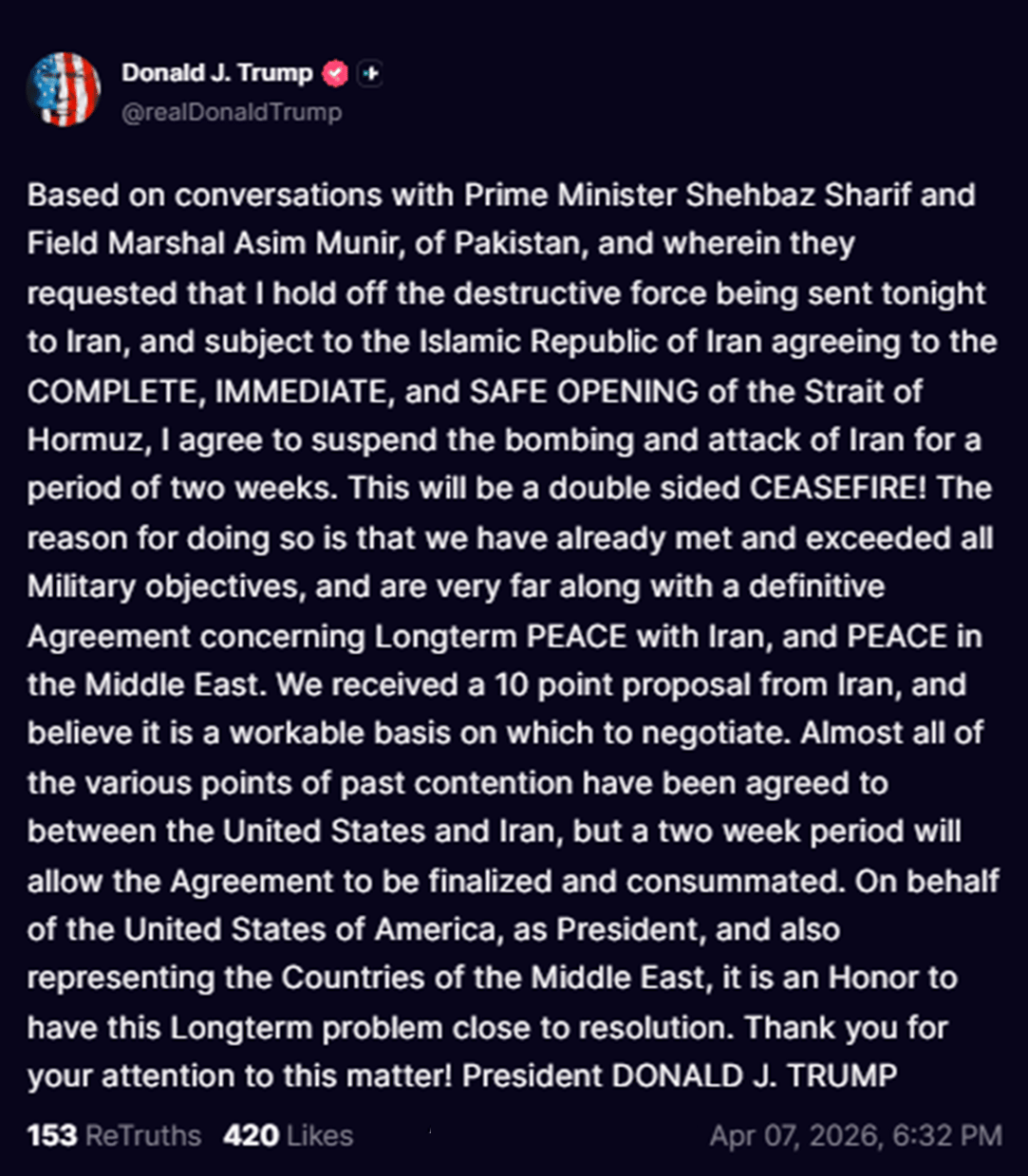
The US and Iran have agreed to a 2-week ceasefire, with Iran reopening the Strait of Hormuz for safe passage effective immediately.
The deal was announced just 90 minutes before President Trump's deadline to unleash massive strikes on Iranian civilian infrastructure, including power plants and bridges.
Pakistan emerged as the key mediator, with Prime Minister Shehbaz Sharif and Field Marshal Asim Munir brokering the agreement between both sides.
Market Volatility Exposes Weak Delegation

When markets get shaky, advisors don’t just manage portfolios. They manage fear, questions, follow-up and a flood of client communication.
That’s where weak delegation gets expensive.
If meeting prep, paperwork, CRM updates and account admin still run through you, response times slip and the client experience takes the hit.
BELAY created the free Financial Advisor’s Delegation Guide to help you identify what to hand off, what to keep and how to stay client-facing without losing control.
Inside, you’ll learn how to reduce bottlenecks, protect responsiveness and free up more time for the work only you should be doing.
Vice President J.D. Vance was looped in late Tuesday to help finalize the agreement, while behind the scenes, China played a critical role in pushing Iran to accept the ceasefire, according to AP and sources from one of the mediating countries.
Iran's Foreign Minister Araghchi confirmed safe passage through Hormuz "will be possible via coordination with Iran's Armed Forces," though warned of "technical limitations."
Trump said he agreed to "suspend the bombing and attack of Iran for a period of two weeks" as long as Iran agrees to "the COMPLETE, IMMEDIATE, and SAFE OPENING of the Strait of Hormuz."
Trump called Iran's 10-point proposal "a workable basis" for negotiations, while Iran claims the US has accepted its plan, which includes sanctions relief, non-aggression guarantees, and Iran's continued control over the Strait.
Israel has also agreed to the ceasefire, according to a White House official, though some Arab states in the Gulf reported continued Iranian attacks in the immediate aftermath of the announcement.
Reports suggest Iran and Oman will continue to charge transit fees on ships passing through the Strait, with proceeds going toward Iran's reconstruction, though this has not been officially confirmed, according to CNN.
Meanwhile, Pakistan's Prime Minister has invited both delegations to Islamabad on Friday, April 10, for further negotiations toward a conclusive agreement.
The US military has already paused strikes inside Iran, according to CNN.
Markets reacted violently to the news:
S&P 500 futures surged +2.67%, Nasdaq 100 +3.33%, while the VIX collapsed -11.6%.
WTI crude plunged -15.1%, to $96, the LARGEST single-day drop since the 1991 Gulf War excluding COVID, while Brent fell -14.1%, to $94.
Gold surged +2.77%, silver jumped +7.67%, and Bitcoin rallied +4.55%, above $71,000.
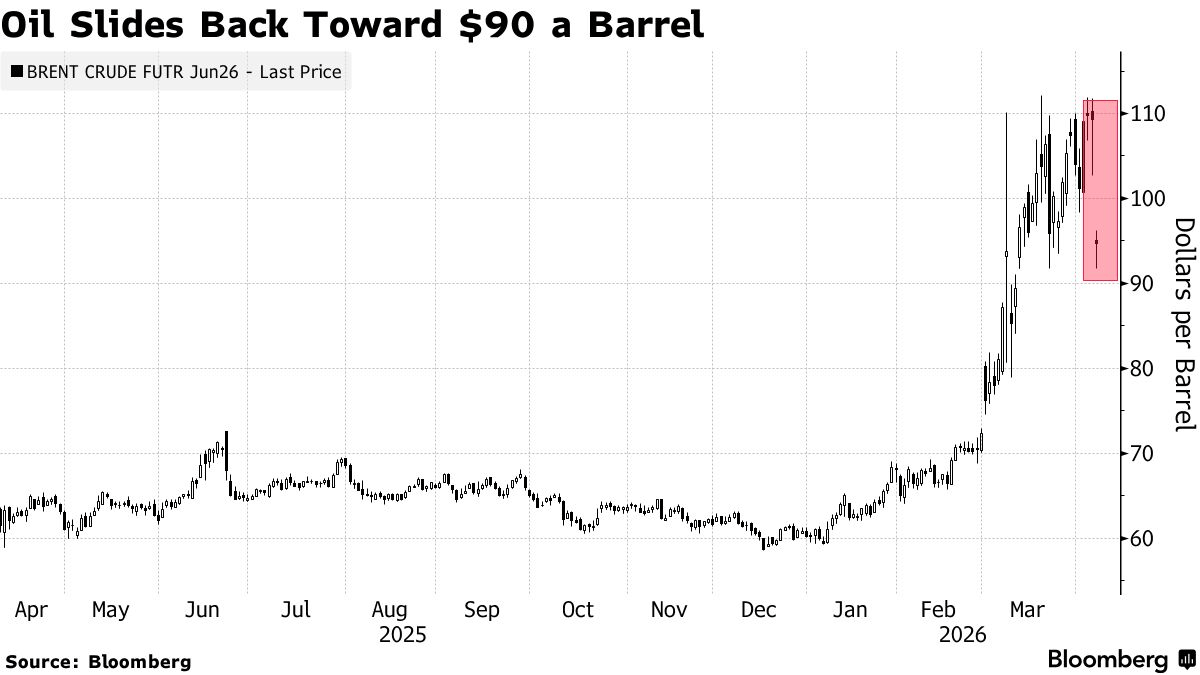

However, skepticism remains as Iran's language around reopening Hormuz is conditional, referencing "technical limitations," and some Gulf states reported continued attacks after the announcement.
Even with the ceasefire, oil prices remain well above pre-war levels, and the transition from a blockade to a new operational regime will be costlier and more complex than what existed before the war.
The worst-case scenario is off the table for now, but the real test will not be in the headlines, it will be when the first tankers attempt to cross the Strait.
All eyes on Hormuz.
If you find it informative and helpful, consider a paid subscription or become a Founding Member, and follow me on Twitter or Nostr:
Reply